Magazine
CARTIER PASHA: timeless charm
In our magazine, we have already had the opportunity to dwell on mythical timepieces linked to legendary figures: the history of watchmaking has often been intertwined with that of costume thanks to famous personalities who, by wearing a certain model - by taste and personal choice - became its testimonial, to the point of embodying it in the eyes of enthusiasts and sometimes unintentionally giving it their own name: one for all, think of Steve McQueen with Rolex. With Cartier's Pasha, the subject of our story today, things were different. It was the patron himself who commissioned the clock that was eventually named after him, a clock whose traces were unfortunately eventually lost.
In our magazine, we have already had the opportunity to dwell on mythical timepieces linked to legendary figures: often the history of watchmaking has been intertwined with that of costume thanks to famous personalities, who by wearing a certain model - by taste and personal choice - became its de facto testimonial, to the point of embodying it in the eyes of enthusiasts and sometimes unintentionally giving it their own name: one for all, think of Steve Mc Queen with Rolex.
With Cartier's Pasha, the subject of our story today, things went differently. It was the patron himself who commissioned the watch that was eventually named after him, a watch whose traces were unfortunately eventually lost.
It is a fascinating story shrouded in a veil of mystery .
But let's take a step back.
The prestigious maison Cartier was born in 1847 as a jewellery manufacturer, but thanks to the intuition of Louis Cartier, the founder's grandson of the same name, it was soon able to 'intercept' in the 20th century the incredible emerging potential of watchmaking, so much so that among the first wristwatches in history was a Cartier, the Santos.
It was, however, precisely these jeweller origins (never betrayed, indeed perpetuated to this day) that made Cartier a brand as close to the international world of the high aristocracyas Rolex was to the world of sport.
And it was no coincidence that it was a prince, Pasha of Marrakech El Glaoui, who in the early 1930s asked the boutique at Rue de la Paix to create a timepiece with special characteristics.
A great lover of the dolce vita and the Parisian maison, however, Pasha wanted a watch with more high-performance features that would allow him to move with ease from the elegant socialites of the international jet set to more disengaged occasions, such as a drink by the pool.
Waterproofing thus became a fundamental requirement. This was not the easiest challenge at the time.
Cartier technicians worked hard on the project with various tests - to which some historical photos bear witness -, starting with a model on which they developed a new system to protect the crown from infiltration.
Unfortunately, no trace of the final model has survived, and the whole affair now takes on legendary contours.
But one thing is known: the shape of the case was not yet round.
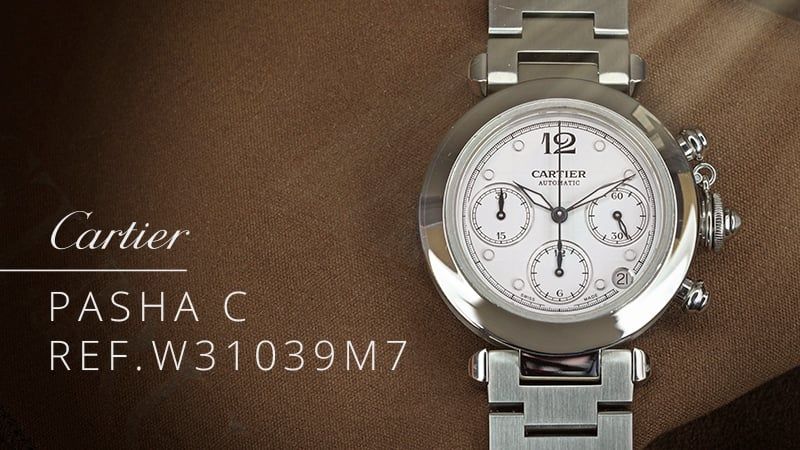
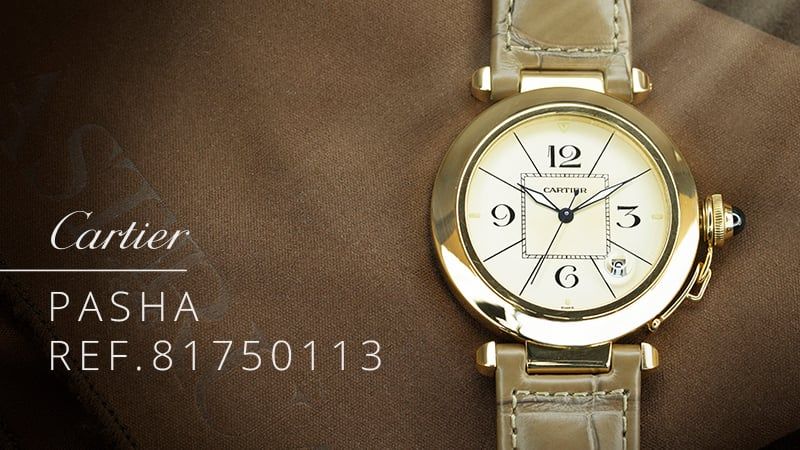
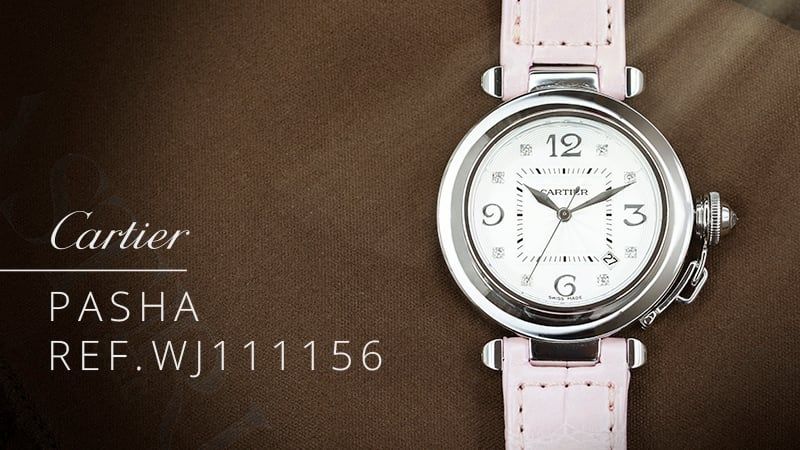
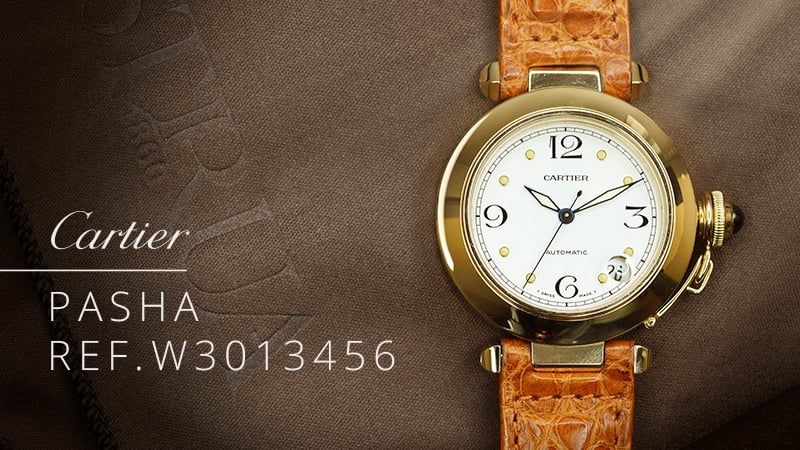
We have to wait until the 1940s to see the progenitors of the modern Pasha , generously sized, round, equipped with a voluminous crown cover and a grille to protect the crystal from shocks (the very hard sapphire crystal was still to come), and which will return as a feature in the production of some contemporary models.
The stylistic 'ingredients' in short, were almost all there, and we find them again in 1985, the year in which Cartier takes up the challenge towards a more modern watchmaking launched a few years earlier by Audemars Piguet with the Royal Oak and by Patek Philippe with the Nautilus, and presents its new icon, entrusting it not by chance to the same creative mind that had designed the first two: that of Gerald Genta.
The name of the new watch is officially 'Pasha', a completely different timepiece from those produced at the time by the Maison, mostly of contained volumes and square shapes.
As a reminder of its historical origin, it is dominated by the iconic crown cover attached by a chain to the case middle.
Round, the Pasha renounces the classical Roman numerals that are distinctive of Cartier, in favour of an essential Arabic numeral (3, 6, 9 and 12), on a dial that is striking for the concomitance of its circular shape with an atypical square chapter ring.
The strap attachment lugs end in two distinctive side nuts in the shape of 'clous de paris'.
The design overall, fascinating and deliberately disorienting, is yet another stroke of genius by Genta, and immediately enters the collective imagination of enthusiasts.
Over the decades, different models have followed, always faithful to the initial stylistic features, whether the dimensions are contained to 35mm or grow to 38 and 41mm; whether the steel case continues in a metal bracelet or a refined leather strap encircles a gold case (in which case, the stone on the crown cover is a precious sapphire).
Whether time-only or chronograph, the Pasha has always been a watch of crystalline class, distinctive of a personal taste strong and original.
Cartier has kept aficionados of this splendid timepiece on their toes over the past five years, momentarily ceasing production.
But just a few months ago, at the 'virtual' show Watches and Wonders (which we wrote about at the time), the Parisian maison pulled the ace out of its sleeve, presenting the world with the new, coveted Pasha.
The available images tell us of a timeless champion in two sizes (35 and 41 mm), in steel or in yellow or Rose Gold , with an unmistakably original imprint, boasting the mechanical 1847MC calibre inside, resistant to magnetic fields, and featuring a simplifying element on the outside, such as the new bracelet changing system Quick Switch, as well as a stylish detail, a typically Cartier touch of charm, such as the shaped carrure under the chain of the crown cover, which leaves room for the possible engraving of a monogram, which will however be hidden once the crown cover is tightened, so that the personalisation remains a discreet whisper: this is Cartier, noblesse oblige.