Magazine
Rolex Explorer II: the arrow of myth
The 1950s were the symbol of economic, civil and cultural recovery after the horrors of World War II. The desire to start again, to live, to explore new real and metaphorical spaces literally explodes. It is no coincidence that a number of watches destined to enter the imagination of enthusiasts were born in that period.
The 1950s were the symbol of the economic, civil and cultural restart after the horrors of the Second World War. The desire to start again, to live, to explore new real and metaphorical spaces literally exploded. It is no coincidence that several watches destined to enter the imagination of enthusiasts were born in that period.In 1952 the Rolex Explorer comes out (ref 6098 , but the writing on the dial will arrive the following year with ref 6350 ), the first 'technical' watch of the Maison, designed for extreme environments and climates, with a dial marked for ease of reading, just three large Arabic numerals and tritium luminescent.In those years, we are in 1953 , the Explorer encircles the wrists of the daring mountaineers conquering Everest , linking its image forever to the world of mountaineering. This glorious timepiece is succeeded, some twenty years later, by the celebrated Explorer II . We are in 1971 , and this new reference Rolex 1655 becomes famous as 'dart' . In fact, many also know the watch as 'Steve McQueen' , despite the fact that the actor never wore it during a film.
Probably, as was the case with the Daytona 'Paul Newman', the pair was born as a result of the actor's great private passion for Rolexes and for this model in particular.
The design is decidedly 'technical', in line with the image conceived for the world of exploration.
The need for an immediate distinction between day and night hours (think of a speleologist, lost for a long time in the unreal darkness of deep excavations) is the basis of the iconic large orange arrow - from which the watch's nickname derives - which makes a complete circle of the dial in 24 hours.
The case and bracelet are obviously made of solid steel, as is the outer bezel. The dial is sporty, black with markers in tritium.
In 1985 goes out of production, without having had the hoped-for success, which will only prove to be overwhelming later on, with absolute quotations for historic examples, as was the case with the Daytona.
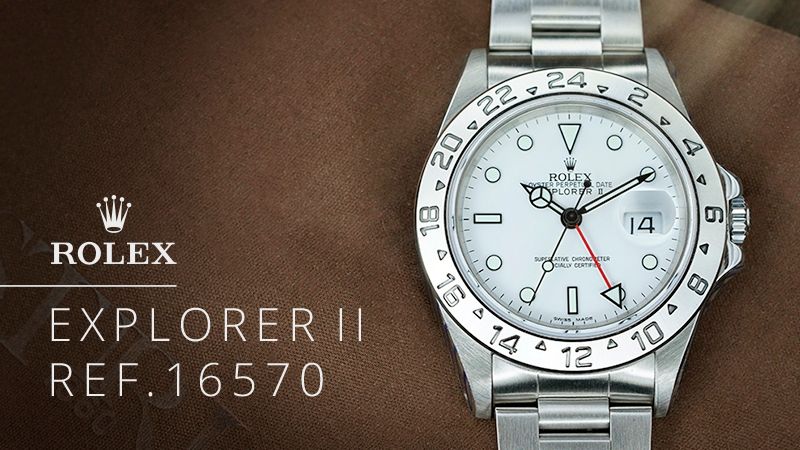
The new reference 16550 is thus born, with a decisive renewal of image. The spheres change, becoming 'mercedes', the rounded hour-markers appear at tumbler; the iconic arrow gives way to a thinned and decidedly more discreet 24-hour sphere.
The dial adds the white version to the classic black.
In 1988 the new reference, 16570, essentially the same, but equipped with a new Rolex calibre.
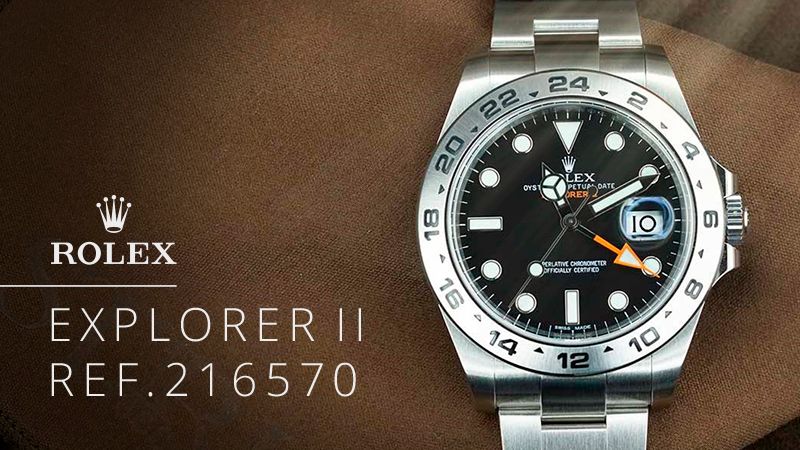
And we finally arrive, in 2011, at the latest version, ref 216570, with the diameter increasing to 42 mm, a more contemporary size.
Nevertheless, the rough imprint of the extreme timepiece remains clear, with its steel case and bracelet strictly satin-finished, not polished, and above all with the return of the unmistakable sign of a watch that has entered the legend: the big orange arrow.
SECONDI POLSO ASTRUA: DISCOVER OUR SELECTION