Magazine
Luminor Panerai on the wrist of heroes
In the Astrua magazine it sometimes happens that I am lucky enough to be able to tell you about a watch that has such an important history that the article practically writes itself, without any Pindaric volley or effort of imagination on the part of the writer of these lines. This happens (unfortunately not as often as we enthusiasts would like) when a watch is born directly into legend, without any subsequent marketing constructions, i.e. when the reason for its creation, its practical use and the exploits of the person wearing it on his wrist merge into a single, glorious page of History (yes, the one with a capital S). The Officine Panerai myth was officially born in 1941 in this way, forged by the real needs of war, and sublimated by the heroism of the handful of daring men who made it famous.
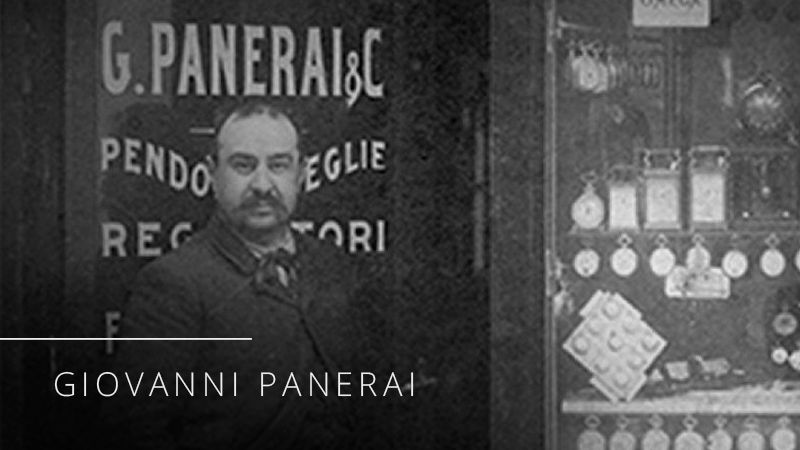
On the magazine of Astrua it sometimes happens that I am lucky enough to be able to tell you about a watch that has such an important history that the article practically writes itself, without any Pindaric volley or effort of imagination on the part of the writer of these lines.This happens (unfortunately not as often as we enthusiasts would like) when a watch is born directly in the legend , without any subsequent marketing constructions, i.e. when the reason for which it was created, its practical use and the exploits of the person who wears it on his wrist merge into a single, glorious page of History (yes, the one with a capital S).The myth of Officine Panerai was officially born in 1941 thus, forged by the real needs of war, and sublimated by the heroism of the handful of daring men who made it famous.In reality, the small Florentine workshop had seen the light eighty years earlier, when Giovanni Panerai in 1860 in Ponte alle Grazie opened the doors of his watch repair and supply workshop, calling it 'Orologeria svizzera' , where he also made professional measuring instruments.
The latter activity almost immediately made him the official supplier of the Regia Marina, a fundamental event for Panerai.
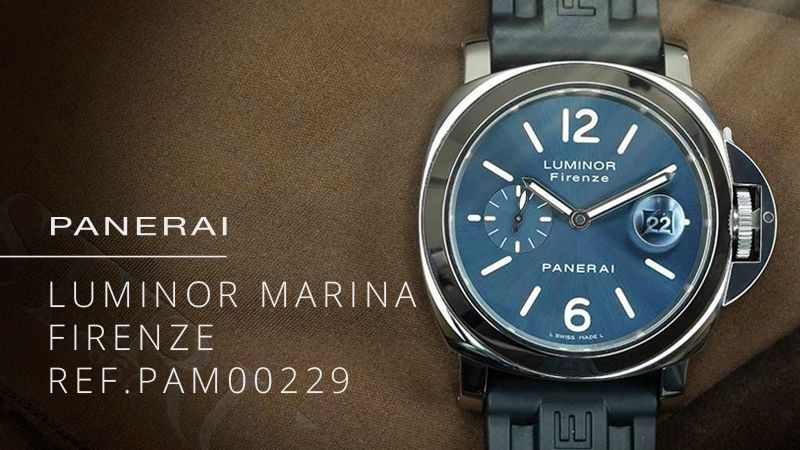
His successor Guido studied at length the problem of underwater luminosity of the instruments, and it is no coincidence that the two Panerai watchmakers still bear the name of two official patents of the company (dated 1916 and 1949 respectively) on luminescent material: first the Radiomir, which took its name from the radium, then - to replace that material, which had proved to be radioactive and therefore dangerous for the workers during manufacture - the Luminor.
The Italian Navy in the 1930s commissioned timepieces from the Tuscan workshop to be worn during underwater missions.
If Panerai had solved brilliantly (it has to be said) the question of underwater visibility, it remained to be decided with which movement and case to complete those dials.
The choice fell to the brand that was then furthest ahead of all divers: Rolex, which also ensured robustness and running reliability, essential for the divers who had to carry out missions in which time coordination, hence precision, was a prerequisite for success.
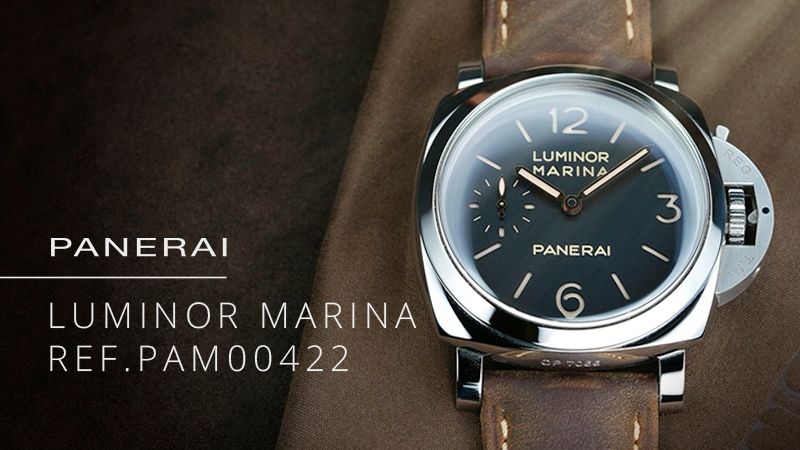
Panerai modified those pocket watches with its dial and on their case 'coussin', which later became emblematic of the House, welded the lugs (later the case became a monobloc whole with the lugs, to remedy the fragility of the first models), from which a very long, water-resistant strap emerged, to be worn on the wetsuit.
It was with those instruments that, on the night between 18 and 19 December 1941, six Italian soldiers performed one of the most incredible war exploits of the Second World War..
The Italian Navy had in fact invented small and agile submarines, torpedoes to be ridden on horseback, called SLC (slow-running torpedoes) but immediately renamed 'pigs'.
Six servicemen belonging to the unit 'Tenth MAS' submerged themselves on three pigs, off the port of Alexandria in Egypt, in order to dive under the British armoured ships Valiant and Queen Elizabeth moored there and place explosive charges on the ships' keels.
While the mission targeting the Queen Elizabeth - albeit a risky one amidst the underwater anti-torpedo mines and the ravenous sharks of the Egyptian sea - succeeded without a hitch, the pig that was to arrive under the Valiant was damaged during the difficult navigation, and one of its two occupants suffered a respirator accident that forced him to emerge.
The Genoese lieutenant Luigi Durand de la Penne, left alone, continued his mission by dragging his pig - which had broken down - along the seabed for more than forty minutes, finally placed the charge where set and, having resurfaced, was captured.
When questioned, he refused to tell the location of the explosives and the time of the explosion.
He was then locked up in a cabin located at a lower level than the ship's waterline, which would have flooded soon after the sinking.
But even this did not deter him.
Half an hour before the explosion, de La Penne asked to speak to the captain, only warning him to quickly get the crew to safety.
In an extreme attempt to avert the sinking, the British decided to imprison him again in the cabin, so that he would finally speak to save his own life.
De la Penne instead waited for his own end, with stoic determination.
But soon after the explosion, he noticed that someone had providentially opened the door, and he quickly climbed the stairs and gained the deck, where the few remaining British sailors still standing there paid him an admiring military salute..
The British fleet suffered a tragic blow.
Winston Churchill laconically commented that it had been enough six Italian without much equipment to cause his Majesty's Empire in the Mediterranean to falter .
The gold medal that De la Penne and the other five raiders deserved, in '44, was pinned to their chests by the man whom an incredible destiny sanctioned as their new ally: sir Charles Morgan: he was the former admiral of Battleship Valiant.
On the wrist of those Italian heroes, in the nocturnal darkness of the Alexandria sea, were the indispensable Panerai watches.
Those forms, that simple yet so recognisable stylistic imprint has never substantially changed.
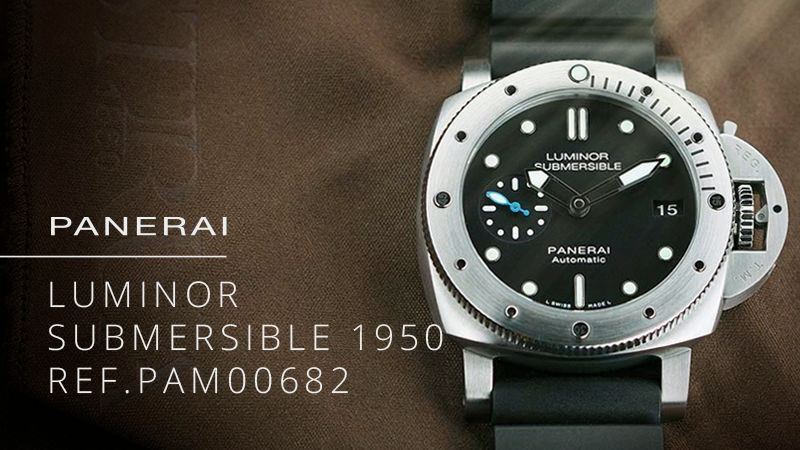
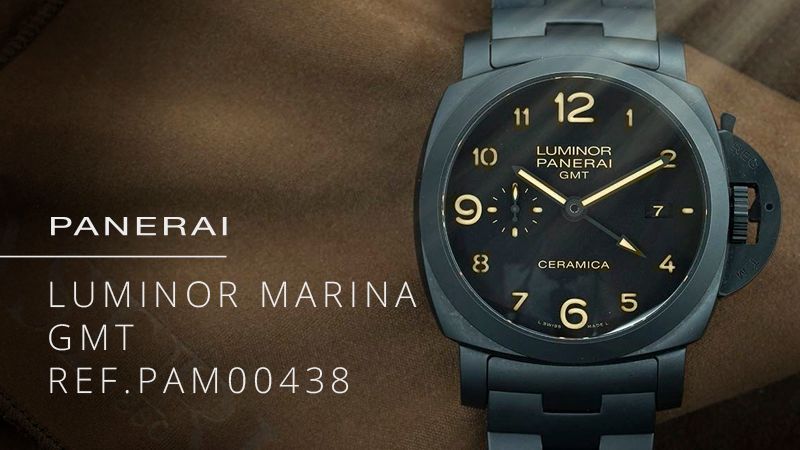
The watches of Officine Panerai owe their physiognomy to that military heritage, hence extremely practical: from the highly visible numerals, engraved in the upper dial so that the lower one covered in luminescent material can be seen below (hence the name "sandwich" dial) to the voluminous and robust cases and the crown locking system of the Luminor models: a bridge equipped with a lever which, when closed, compresses the gaskets to allow it to descend into the abyss.
This choice also stemmed from a technical reason: the first Panerai watches had a classical screw-down system of the crown, but being equipped with manual gauges the continuous unscrewing of the latter to wind the watch spring sometimes led to the compromise of the threading, with serious risks for the seal in immersion. Hence the reason for this solution, which then became stylistically iconic.
The evolution of Officine Panerai in recent decades, in keeping with the history of the company, has also concerned technique and substance: the calibres fitted today are manufacture, from the manual-winding movement 8-day reserve to the automatic one.
International aficionados see in Panerai the charm of a true tradition.
In a world where 'military watch' is almost always just a locution indicating a certain stylistic line, when we wear a Luminor Panerai we know that on our wrist there is a small, fascinating and glorious piece of history.