Glossary
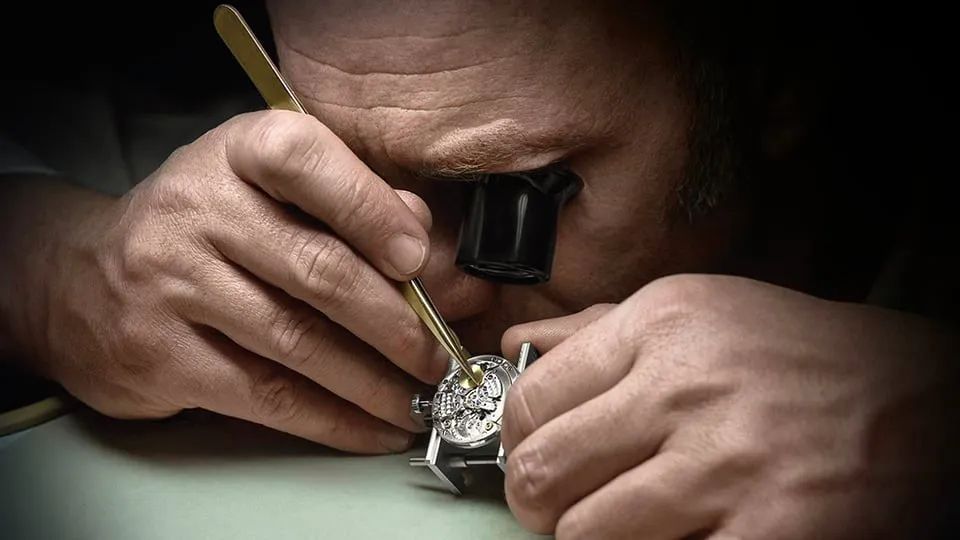
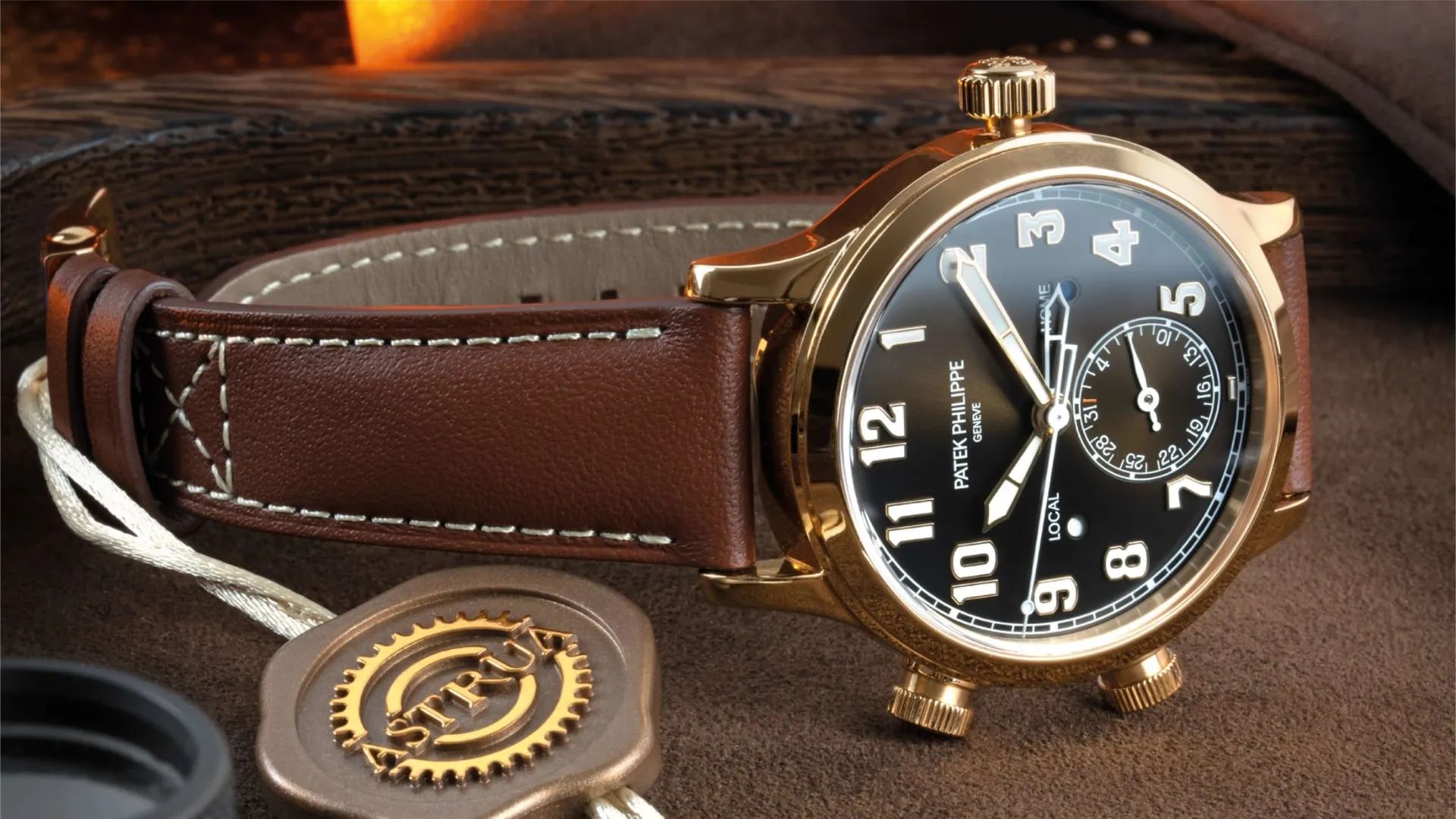
Entering the world of fine watchmaking means discovering a universe shaped by technical mastery, savoir-faire and details that reveal the history and identity of every timepiece. In this glossary, we have gathered essential terms, functions and components to help you better understand the language and complexity of luxury watchmaking, from traditional artisanal craftsmanship to the most sophisticated innovations.
As Official Authorised Retailers of some of the world's most prestigious international watch brands, we place our expertise at the service of those who wish to discover, choose and explore the world of fine watchmaking. Should you require further information, our experts are always available to assist you. Please do not hesitate to contact us.
Our expertise also extends to our Official Technical Service, dedicated to the maintenance and care of your timepieces, as well as to a curated selection of pre-owned luxury watches, chosen with the same attention and professionalism that have always distinguished Astrua.
A
Alternation / Beat
One half-oscillation of the balance wheel. The number of beats per hour (BPH) determines the movement's frequency. Common values include 18,000, 21,600, 28,800 and 36,000 BPH. A higher frequency generally provides greater theoretical precision.
Analog Display
A traditional method of displaying time using hands moving over a graduated dial, as opposed to a digital numerical display.
Antimagnetic
A characteristic of a watch designed to resist magnetic fields without affecting its precision. This is achieved through the use of non-ferromagnetic materials in the movement's critical components.
Aperture / Display Window
A window cut into the dial to display indications such as the date, day of the week, month, moon phase or a second time zone.
Automatic Movement
A mechanical movement equipped with a rotor, or oscillating weight, that winds the mainspring automatically through the natural motion of the wearer's wrist, eliminating the need for manual winding.
B
Balance Wheel
The beating heart of a mechanical watch. Together with the hairspring, it regulates the movement's rate. The consistency of its oscillations determines the watch's precision by transforming the constant energy of the mainspring into a controlled alternating motion.
Barrel
The driving organ of a mechanical watch: a cylindrical container housing the mainspring. As the spring gradually unwinds, the barrel rotates and transmits power to the gear train.
Bezel (Fixed Bezel)
The fixed bezel is a stationary ring securely attached to the watch case. Its primary function is structural: it holds and seals the crystal over the dial, ensuring the watch remains water-resistant. It may feature engraved scales (tachymeter or pulsometer scales). Beyond its technical role, the fixed bezel is a key design element, featuring smooth, brushed, fluted, or gem-set finishes that define the timepiece's overall style and elegance.
Bezel (Rotating Bezel)
The rotating bezel is a movable ring (either unidirectional or bidirectional) mounted on the front of the case. It surrounds the dial and the crystal, completing both the aesthetic and functional architecture of the watch. Depending on the model, it allows the wearer to measure elapsed time (such as dive times in Diver models), track multiple time zones (in GMT models), or calculate specific parameters. Crafted from various materials like steel, gold, ceramic, or composites, it often serves as a defining hallmark of a timepiece's design.
Bracelet
A metal strap (steel, gold, titanium, or platinum) composed of interconnected links that wraps around the wrist to hold the watch in place. In addition to its practical function, it contributes significantly to the watch’s aesthetic identity: from the craftsmanship of the links to the surface finish, every detail reflects the design philosophy of the Maison that creates it. It can be fixed or interchangeable.
Bridges
Structural components, generally made of brass, that work together with the mainplate to support the pivots of the movement's rotating parts, including the balance wheel, gear train and escapement. In fine watchmaking, they are often beautifully decorated.
C
Cabochon
A precious or semi-precious gemstone cut with a smooth, convex surface. It is traditionally used to adorn the crowns of fine watches, particularly those produced by Cartier.
Calendar
A complication displaying one or more calendar indications on the dial. It may be a simple date display, day-date, complete calendar (date, day, month and moon phases), annual calendar or perpetual calendar.
Calibre
The designation identifying a specific movement by its dimensions and construction, usually accompanied by the manufacturer's name and a reference number (for example, Rolex Calibre 3235). The term originates from the historical unit of measurement known as the "ligne."
Carrure / Case Middle
The central section of the watch case that connects the bezel and the caseback. It houses the crown, pushers and lugs to which the strap or bracelet is attached.
Case
The external structure that houses and protects the movement. It consists of the bezel, carrure and caseback, and may be crafted from steel, gold, platinum, titanium, ceramic or carbon.
Caseback
The rear part of the watch case. It may be snap-on, screw-down or secured with screws. Sapphire crystal casebacks reveal the movement, while engraved or decorated solid casebacks are often a mark of prestige.
Chronograph
A complication that measures elapsed time independently from standard timekeeping. It is operated by pushers and typically features a central chronograph seconds hand together with minute and hour counters.
Chronometer
A watch whose movement has successfully passed official precision tests, typically conducted by the COSC. The term denotes certified accuracy and should not be confused with a chronograph.
Complication
Any function beyond the indication of hours, minutes and seconds. Complications may be practical, such as a date display, alarm or GMT function, or highly sophisticated, including the tourbillon, perpetual calendar or minute repeater.
Corrector
A small recessed pusher, usually operated with a stylus, allowing individual calendar indications such as the date, day or month to be adjusted without using the crown.
COSC
The Contrôle Officiel Suisse des Chronomètres, the independent Swiss authority responsible for certifying the precision of watch movements. A COSC-certified movement must maintain a daily deviation between -4 and +6 seconds. Certification also evaluates resistance to magnetism, power reserve and overall performance under everyday conditions.
Côtes de Genève
A traditional decorative finish consisting of parallel Geneva stripes applied to bridges, mainplates and rotors. It is one of the most recognisable hallmarks of fine Genevan watchmaking.
Crown
The external component projecting from the carrure and connected to the winding stem. It is used to wind the movement and adjust the time and other indications. On sports watches, it is often screw-down to ensure water resistance.
Cubic Zirconia
A synthetic gemstone occasionally used as a decorative alternative to diamond in jewellery-oriented watches. It should not be confused with natural diamond when evaluating or certifying fine timepieces.
D
Date Display
The most common watchmaking complication, indicating the current day of the month through a hand, a rotating disc visible through an aperture, or a large-date display using twin discs.
Décor Guillochage
A decorative technique created with a mechanical rose engine that engraves repetitive geometric patterns—such as barleycorn, sunburst or rosettes—onto dials and casebacks, producing changing reflections under the light. A hallmark of traditional Haute Horlogerie.
Dial
The "face" of the watch, displaying the hands, hour markers and all time indications. Dials may be crafted from brass, silver, gold, mother-of-pearl, enamel, meteorite or other precious and decorative materials.
Dial - Skeleton Dial
A partially or fully open-worked dial that reveals the movement beneath the crystal, showcasing the mechanical architecture while combining technical complexity with aesthetic refinement.
Diver
A category of watches specifically designed for underwater diving. To qualify, a watch must comply with ISO 6425 standards, including a minimum water resistance of 100 metres, a unidirectional rotating bezel, a screw-down crown and a sealed caseback.
Dual Time (GMT)
A complication displaying the time in two different time zones simultaneously, usually through an additional 24-hour hand or a dedicated disc on the dial, often combined with a bidirectional rotating bezel.
E
Ébauche
A French term referring to the unfinished base structure of a movement before the functional components, regulating organ and decorative finishes are added. Ébauches are often supplied by specialised manufacturers and completed by the watch brand.
Émail
Coloured vitreous enamel fired at high temperatures and used to decorate dials and watch cases. The principal techniques include cloisonné, champlevé and grisaille, all rooted in centuries-old artisanal traditions.
Equation du Temps
An exceptionally sophisticated complication displaying the difference, which varies throughout the year, between true solar time and conventional civil time. It is considered one of the masterpieces of Haute Horlogerie.
Escape Wheel
The final wheel of the gear train. Working together with the pallet fork, it transmits impulses to the balance wheel while regulating the release of energy from the mainspring. Its tooth geometry is critical to the efficiency of the escapement.
Escapement
The mechanism responsible for releasing the mainspring's stored energy in controlled increments to the gear train. The Swiss lever escapement is the most common design in modern mechanical watchmaking, while the tourbillon represents an advanced solution developed to minimise positional timing variations.
Exclusivity
One of the defining characteristics of luxury watchmaking. Production is intentionally limited—often to only a handful of pieces per reference—enhancing uniqueness, desirability and long-term collectability.
F
Finishing
The collection of decorative and functional surface treatments applied to movement components and the case, including satin brushing, mirror polishing, anglage, perlage and Côtes de Genève.
Flyback
An advanced chronograph function allowing the elapsed-time measurement to be reset and restarted instantly with a single press of a button, eliminating the need for the usual stop-reset-start sequence.
Frequency
The number of complete oscillations performed by the balance wheel each second, measured in Hertz (Hz). Higher frequencies generally improve precision but require more energy and increase wear on the movement's components.
G
GMT
Abbreviation for Greenwich Mean Time. By extension, it also refers to a complication that displays a second time zone through an additional 24-hour hand. Popularised by the Rolex GMT-Master, it is now one of the most widely appreciated complications for travellers.
Going Train
The series of wheels and pinions transmitting energy from the barrel to the escapement while progressively reducing rotational speed. It includes the centre wheel, third wheel, fourth wheel and escape wheel.
Gold - 18-Carat
The standard gold alloy used in luxury watchmaking, consisting of 750 parts pure gold per thousand. Available in yellow, rose and white gold, it combines lasting beauty, durability and intrinsic value.
Grand Complication
The highest level of mechanical complexity in watchmaking. A watch featuring at least three major complications—typically a perpetual calendar, minute repeater and chronograph—is considered a Grand Complication, representing the pinnacle of technical achievement.
Grand Feu
An enamelling technique involving multiple firings at extremely high temperatures (up to 900°C). It produces dials of exceptional depth and brilliance and is considered one of the finest expressions of traditional watchmaking craftsmanship.
Grand Feu Enamel
A centuries-old decorative technique in which coloured glass powders are applied to metal surfaces and fired repeatedly at temperatures exceeding 800°C. The result is a dial of remarkable beauty, depth and permanence.
Guillochage
A decorative technique performed on a rose engine lathe, engraving highly precise geometric patterns—such as soleil, barleycorn or Clous de Paris—onto dials, bezels or casebacks. Each dial requires many hours of meticulous craftsmanship.
H
Hairspring
An extremely fine spiral spring attached to the balance wheel. Its elasticity determines the oscillation frequency of the regulating organ and therefore the watch's precision. The Breguet overcoil remains one of the most celebrated forms.
Hands
Elongated metal elements that rotate on the dial to indicate hours, minutes, seconds, and other functions. They come in many materials (steel, gold, platinum) and shapes (Dauphine, baton, Breguet, pear, arrow, Mercedes, leaf, cathedral). They often contain luminescent material (radium, tritium, Luminova, Super-Luminova).
Haute Horlogerie
Term referring to the most exclusive segment of watchmaking, distinguished by the highest standards of technical, aesthetic, and craftmanship excellence. It designates timepieces crafted from the finest materials, featuring highly sophisticated movements and extensive hand-finishing, often produced in extremely limited quantities
Heure Sautante
A jumping-hour display in which the hour appears through a small aperture and changes instantaneously rather than progressing continuously. It requires a highly precise mechanism incorporating springs and cams.
Hi-Beat
A commercial designation for high-frequency movements, generally operating at 36,000 beats per hour (5 Hz). The increased frequency offers smoother seconds-hand motion and enhanced theoretical precision.
Hour Markers
The markers displayed on the dial to indicate the hours, minutes and seconds. They may take the form of batons, diamonds, applied metal markers, Arabic numerals, Roman numerals or, in minimalist designs, be omitted entirely.
I
Incabloc
A shock-protection system patented in 1933. A specially designed spring secures the balance staff jewel, allowing it to absorb impacts by moving slightly under shock, thereby protecting the delicate balance assembly.
Integrated Bracelet
An integrated bracelet serves as a natural extension of the watch case, creating a single, harmonious line between the case and the strap. Having become a distinctive feature of some of the most iconic models in contemporary fine watchmaking, it combines comfort, ergonomics, and a highly recognizable aesthetic.
Integrated Movement
A movement entirely designed and manufactured in-house, without relying on externally supplied components or ébauches. It is widely regarded as a hallmark of technical independence and manufacturing excellence.
ISO 6425
The international standard defining the minimum technical requirements for dive watches, including water resistance of at least 100 metres, a unidirectional rotating bezel, resistance to magnetism and shocks, guaranteed legibility in darkness, and a screw-down crown and caseback.
J
Jewels
Synthetic gemstones, typically artificial rubies, used as bearings for the pivots of a movement's gear train. They reduce friction and wear while retaining lubricants. The number of jewels—for example, "25 jewels"—generally reflects the movement's complexity.
Jumping Hour
A time display in which the hour changes instantaneously within an aperture on the dial, rather than being indicated by a traditional hand. See also Heure Sautante.
Jumping Minutes
A rare complication similar to the jumping-hour display, but applied to the minutes. The minute hand or disc advances in discrete one-minute increments instead of moving continuously.
K
Kelvin Scale
The temperature measurement scale used in watchmaking to specify the thermal conditions under which movements are tested. Certified movements are generally evaluated within a temperature range between 8°C and 38°C.
Kif Ultraflex
A premium Swiss shock-protection system, developed as an alternative to Incabloc. It protects the balance staff pivots through a distinctive star-shaped spring and is commonly found in high-end mechanical movements.
L
Lever / Pallet Fork
The anchor-shaped component of the escapement that interacts with the escape wheel. It transfers impulses to the balance wheel, sustaining its oscillation while regulating the controlled release of energy from the mainspring.
Ligne
A historical French unit of measurement still used in watchmaking to indicate the diameter of a movement. One ligne equals approximately 2.255 mm. A movement measuring 12 lignes therefore has a diameter of roughly 27 mm.
LumiNova (Green hue) / Super-LumiNova (Blue hue)
Photoluminescent materials applied to hands and hour markers to ensure readability in darkness or low-light conditions. They absorb light and release it gradually without using radioactive substances, unlike the historical radium-based compounds.
M
Mainplate
The base plate of the movement, generally made of gilt brass, on which all the bridges and mechanical components are mounted. It forms the structural foundation of the calibre.
Mainspring
A thin strip of specially tempered steel coiled inside the barrel. When wound, it stores mechanical energy and gradually releases it to power the movement.
Manufacture
A watch company that designs, produces and assembles its own movements and principal components in-house, without depending on external suppliers. It represents the highest level of technical independence in watchmaking.
Micro-Rotor
A component made of gold, platinum or steel, used for the watch’s automatic winding mechanism. Unlike the rotor, it is integrated into the bridges of the wheels and the barrel. Thanks to this design feature, watchmakers are able to produce slimmer movements.
Minute Repeater
One of the most sophisticated complications in watchmaking. Activated on demand, it chimes the current time using miniature gongs, striking the hours, quarter-hours and remaining minutes. Its construction requires extraordinary technical expertise and hundreds of hours of hand assembly.
Moon Phase
A poetic complication reproducing the lunar cycle of 29 days, 12 hours and 44 minutes through a rotating disc depicting the moon moving behind a crescent-shaped aperture.
Movement
The mechanical heart of the watch: the complete assembly of components that transforms stored energy into the motion of the hands. Movements may be mechanical (manual or automatic) or quartz.
N
Niello
An ancient decorative technique using a black alloy of silver, copper, lead and sulphur to fill engraved patterns on metal surfaces, creating striking decorative contrasts on watch components.
O
Opaline
A dial finish characterised by a smooth, slightly translucent white or cream-coloured surface. Commonly associated with traditional watchmaking, it is often paired with applied gold hour markers and Breguet hands.
Oscillating Weight / Rotor
A semi-circular, or occasionally full, metal rotor—often crafted from gold or platinum—found in automatic movements. Its motion, generated by the wearer's wrist, winds the mainspring within the barrel.
Oscillation
The complete back-and-forth motion of the balance wheel. One oscillation consists of two beats. At 28,800 beats per hour, the balance wheel performs four complete oscillations per second.
P
Perlage
A decorative finish consisting of overlapping circular graining applied to the surfaces of mainplates and bridges. Produced with a rotating abrasive tool, it creates a refined matte texture while helping conceal minor imperfections.
Perpetual Calendar
One of the most prestigious watchmaking complications. It automatically accounts for the varying lengths of months, including leap years, requiring no manual correction until the year 2100.
Pinion
A small toothed gear mounted on the axle of a wheel. Pinions transmit motion through the gear train, reducing rotational speed while increasing torque. Their precision is essential to the movement's accuracy.
Platinum
A dense, hypoallergenic precious metal (21.45 g/cm³), rarer than gold and prized in haute horlogerie for its durability and understated elegance. Its exceptional hardness makes it particularly demanding to machine and finish.
Power Reserve
An indication displayed on the dial or, in some cases, the movement itself, showing the amount of energy remaining in the mainspring. It is generally expressed in hours and indicates when the watch requires winding.
Power Reserve
The maximum period during which a fully wound watch can operate autonomously before requiring winding again. Standard movements generally offer between 38 and 80 hours, while specialised calibres may reach eight days or even longer.
Pusher
A button protruding from the carrure, operated by finger pressure to activate functions such as starting, stopping or resetting a chronograph. On minute repeaters, a sliding lever is generally used instead.
Q
Quartz Movement
A movement regulated by a quartz crystal vibrating at a highly stable frequency of 32,768 Hz when powered by an electrical current. It offers outstanding precision at a lower manufacturing cost than a mechanical movement.
R
Rate
The running performance of a watch. A watch is said to be "running" when its movement is operating. The quality of its rate is assessed by its daily precision, measured in seconds gained or lost.
Rattrapante (Split-Seconds Chronograph)
A highly sophisticated chronograph featuring a second superimposed seconds hand. A third pusher allows one hand to stop for an intermediate reading while the other continues measuring elapsed time.
Remontoir d'Égalité
A constant-force mechanism designed to deliver a uniform amount of energy from the mainspring regardless of its state of wind, significantly improving rate stability throughout the power reserve.
Retrograde
A display in which a hand travels along an arc rather than completing a full rotation, then instantly returns to its starting position. It is commonly used for date or minute indications.
Reverser
A mechanism used in automatic movements that converts the alternating rotation of the rotor into a single winding direction, optimising the charging of the mainspring regardless of the rotor's direction of rotation.
Rotor
A semi-circular or full-disc oscillating weight that rotates freely within an automatic movement. Through a system of gears and reversers, it transfers energy to the mainspring as the wearer moves.
Ruby / Jewel (See Jewels)
A synthetic ruby used as a bearing for the movement's pivots, reducing friction and wear. Depending on its complexity, a quality movement may contain anywhere from 17 to over 50 jewels.
S
Sapphire Crystal
A crystal manufactured from synthetic corundum, with a hardness of 9 on the Mohs scale—second only to diamond. Extremely scratch-resistant, it is commonly treated with anti-reflective coatings on one or both sides.
Serial Number
A unique numerical code on the case of each watch that allows its authenticity to be verified. Essential in the second-hand market and for collectors.
Silicon
An advanced material used for manufacturing movement components such as hairsprings, anchors and escape wheels. Lightweight, antimagnetic, self-lubricating and resistant to temperature variation, it has revolutionised modern mechanical precision.
Skeletonised
A decorative technique in which all non-essential material is removed from the movement or dial, exposing the mechanical architecture beneath. Skeletonisation is considered an art form within Haute Horlogerie.
Small Seconds
A dial layout where the tracking of seconds is assigned to an off-centered hand, housed within its own dedicated sub-dial (typically located at 6 or 9 o'clock). This arrangement, traditional to pocket watches and vintage timepieces, reduces the movement's overall thickness and lends the dial a classic, beautifully balanced, and sophisticated appearance.
Strap
The component that secures the watch to the wrist. It may be made from leather, rubber, nylon (NATO), fabric or other materials. Premium materials and craftsmanship are an integral part of the identity of a luxury watch.
Swiss Made
The protected Swiss designation indicating that a watch satisfies strict legal requirements regarding the origin of its movement, casing and final inspection. Regulated by Swiss federal legislation, it is recognised worldwide as a mark of quality and authenticity.
T
Tachymeter
A graduated scale found on the dial or bezel of a chronograph, used to calculate average speed over a known distance, typically one kilometre or one mile.
Titanium
A lightweight, highly resistant and hypoallergenic metal with a density of approximately 4.5 g/cm³—around 40% lighter than steel. Widely used for luxury sports watches, it combines exceptional comfort with outstanding durability.
Tonneau
A barrel-shaped watch case featuring convex sides and curved upper and lower edges. This elegant form has appeared in many iconic luxury timepieces and offers both ergonomic comfort and a distinctive aesthetic.
Tourbillon
Invented and patented by Abraham-Louis Breguet in 1801, the tourbillon places the balance wheel, hairspring and escapement inside a rotating cage that typically completes one revolution per minute. It was originally designed to compensate for the effects of gravity on pocket watches.
Trotteuse / Sweep Second Hands
A traditional French horological term used to describe the central seconds hand, mounted on the same central axis as the hour and minute hands. Named after its rapid "trotting" motion around the dial, it provides a continuous visual indication that the mechanical movement is running. Occasionally, the seconds hand is positioned at 6 or 9 o'clock (see Small Seconds), and its execution is critical to the aesthetic balance of the dial.
U
Ultra-Thin
A category of watches distinguished by exceptionally slim movements and cases—generally under 3 mm for the movement and under 5 mm for the complete watch. It represents one of the greatest technical challenges in mechanical watchmaking.
Unidirectional Bezel
A rotating bezel that turns in only one direction, usually counter-clockwise. Mandatory for professional dive watches under ISO 6425, it prevents accidental extension of measured dive times.
W
Water Resistance
The ability of a watch to resist water penetration, expressed in atmospheres (ATM) or metres. Water resistance is ensured by seals positioned around the crown, caseback and crystal.
Water Resistance
A watch's ability to withstand water pressure, expressed in metres or atmospheres (ATM). Water resistance ratings should not be interpreted literally: a watch rated to 30 metres is not suitable for swimming, whereas one rated to 200 metres or more is appropriate for diving.
Winding
The process of tensioning the mainspring. Winding may be manual, via the crown, automatic through the rotor, or achieved using dedicated winding mechanisms. A fully wound mainspring ensures the movement's maximum power reserve.
Winding Stem
A cylindrical steel component that connects the crown to the movement. When turned, it transmits motion to the winding mechanism or the time-setting system.
World Time
A complication capable of displaying the time simultaneously in the world's principal cities across all 24 time zones. It is typically achieved through a city disc combined with a rotating 24-hour ring.
X
X-Ray Inspection
A non-invasive quality-control technique used by leading watch manufacturers to inspect the integrity of internal components without disassembling the watch, ensuring compliance with the highest manufacturing standards.
Y
Yellow Gold
The traditional gold alloy used in luxury watchmaking, composed of pure gold combined with silver and copper. Eighteen-carat yellow gold remains one of the most enduring symbols of elegance and prestige.
Z
Zero Marker
The reference point on a chronograph scale or rotating bezel, usually positioned at 12 o'clock, from which elapsed-time measurements begin.