Magazine
Edward Green: at the foot of Tradition
In one of the funniest dialogues in 'My Africa', Meryl Streep complains to Robert Redford that poets devote their attention and most inspired lyrics only to the noble parts of the body: to the eyes, the hair, the hands, always snubbing the 'rough' feet, which toil all day and do not even have the satisfaction of being given a courtly accolade.
In one of the funniest dialogues in 'My Africa', Meryl Streep complains to Robert Redford that poets devote their attention and most inspired lyrics only to the noble parts of the body: to the eyes, the hair, the hands, always snubbing the 'rough' feet, which toil all day long and do not even have the satisfaction of being paid a courtly tribute. But where poetic art does not arrive, admirably comes English craftsmanship , capable of giving our extremities authentic masterpieces.Edward Green from 1890 lavished all his passion and skill in building "the best shoes possible" , enlisting in his own factory in Northampton - where this prestigious brand is still based - the best shoemakers around, who have made absolute excellence their construction paradigm. As it happens in the art of haute horlogerie, the ancient machinery used for the production of Edward Green must be constantly guided and calibrated by the skilful attention of the craftsman, who still manually stretches the best leathers , draws essential shreds to define the lines, working, with handed down tools, on the painstaking accuracy of the finishing .
This is why no more than 350 pairs of shoes come out of the factory at Northampton every week, in demand all over the world, and each one bears the marks of uniqueness and extreme care.
And while the cornerstones of the traditional British style remain firm in the House collection, Edward Green over the years has been able to put his talent at the service of the whimsical taste of the refined contemporary dandy, working on the redefinition of shapes and colours.
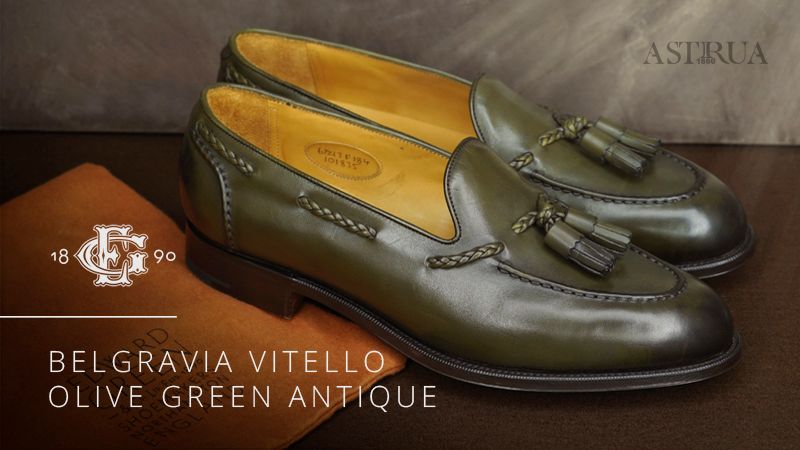
It is surprising how the contemporary and always up-to-date line of the moccasin - with the tassels that add lightness to the solidity of the shape - can draw on new expressive capacities by focusing on warm and less obvious colours, such as the sumptuous olive green of Belgravia.
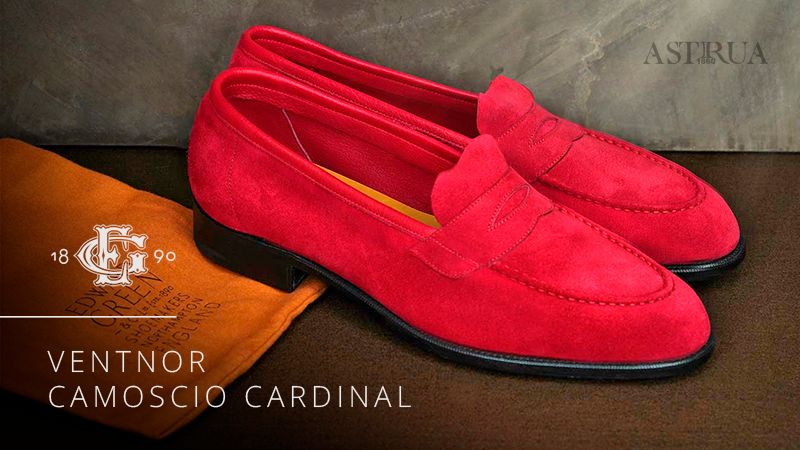
With the Ventnor we take a plunge into the almost Mediterranean vibrancy of cardinal suede, with a sophisticated reddish chromatic note that reveals that good taste knows how to dare towards the paths less travelled.
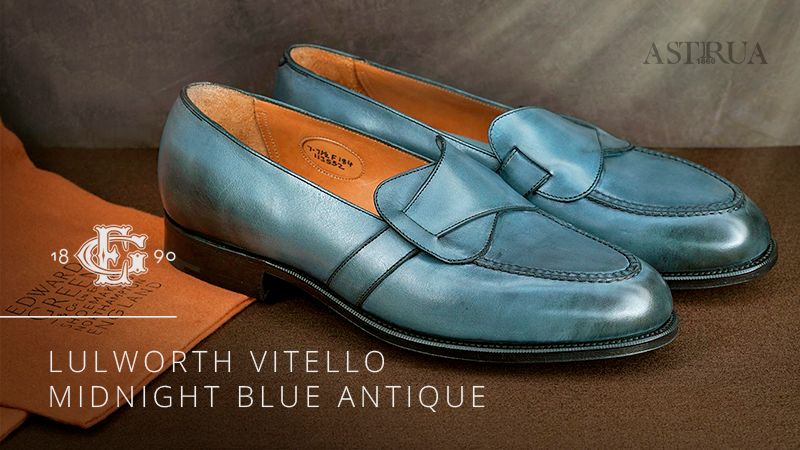
And the Dadaist weave of Lulworth takes us to the subtle border with the shoe as an object in itself, a sculptural suggestion that in antique blue finds the colour that gives timeless depth to a small masterpiece of taste, to the irreverent wonder of dressing to please, in the end, above all oneself.